Quick Answer:
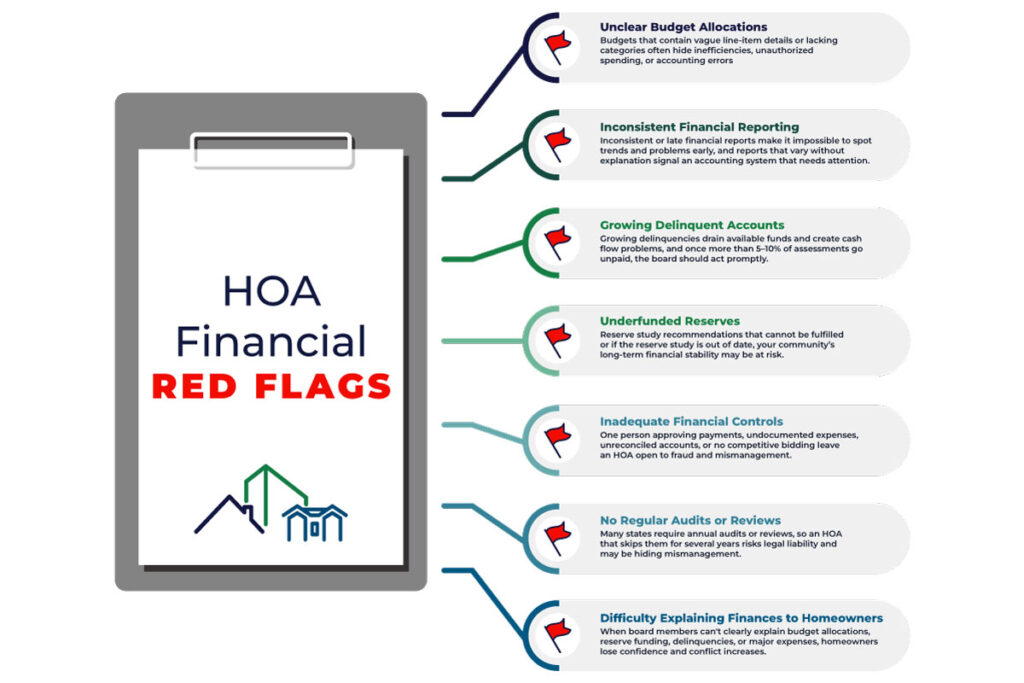
Red flags in HOA financial management include unclear budget allocations, inconsistent financial reporting, growing delinquent accounts, underfunded reserves, inadequate financial controls, lack of regular audits, and difficulty explaining finances to homeowners. These warning signs indicate potential fraud, mismanagement, or compliance violations. Professional HOA accounting services like HOALiving help boards identify and correct financial problems before they become crises, ensuring compliance and providing peace of mind.
HOA board members often discover financial problems too late: after special assessments become necessary, auditors identify violations, or homeowners demand answers. Recognizing red flags early allows boards to take corrective action before problems escalate into crises.
This guide identifies seven critical warning signs that your HOA's financial management needs professional attention. Understanding these red flags helps board members protect their communities and fulfill their fiduciary responsibilities.
Red Flag #1: Unclear Budget Allocations
When board members cannot clearly explain how assessment money is allocated, something is wrong. Budgets should break down expenses by category (maintenance, utilities, insurance, management fees, and reserves) with specific line items under each category. If your budget is vague or lacks detail, you cannot effectively manage finances or communicate with homeowners. An explanatory document, sometimes called “footnotes”, can be added to a budget to clarify the definition and uses of each line item.
Unclear budgets often hide inefficiencies, unauthorized spending, or accounting errors. Board members should demand detailed budgets that show exactly where every dollar goes. If your management company or treasurer cannot provide clear budget breakdowns, it's time to seek professional accounting help.
Red Flag #2: Inconsistent Financial Reporting
Your HOA should provide consistent monthly or quarterly financial statements showing income, expenses, and account balances. If financial reports vary significantly from month to month without explanation, or if reports are frequently late or incomplete, your accounting system has problems.
Inconsistent reporting makes it impossible to track financial trends, identify problems early, or make informed decisions. Professional accounting firms maintain consistent reporting schedules and provide standardized financial statements that board members can easily understand and compare over time.

Red Flag #3: Growing Delinquent Accounts
Increasing numbers of homeowners failing to pay assessments signals financial trouble. While some delinquency is normal, growing delinquency indicates either economic problems in your community or weak collection efforts. Either way, delinquent accounts reduce available funds and create cash flow problems.
Board members should monitor delinquency rates monthly and take action when delinquencies exceed 5-10% of total assessments. Professional accounting firms track delinquencies, manage collection efforts, and coordinate with legal counsel when necessary. Addressing delinquencies promptly protects your community's financial health.
Red Flag #4: Underfunded Reserves

Aimee Winegar
Many communities discover their reserves are inadequate only when a major project becomes necessary. If your reserve study recommends funding levels your association’s assessments cannot fulfill, or if you haven't conducted a reserve study recently, your community’s long-term financial stability may be at risk.
“Underfunded reserves force boards to choose between special assessments, deferred maintenance, or increased operating budgets,” said Aimee Winegar, HOALiving’s Midwest Division President.
“When we start budgeting, we begin with reserves because those are essential to the long-term function of the community. Reserves should never be just whatever is ‘left over’ from funding basic operations. Funding reserves is the foundation of a good budget.”
Professional reserve studies identify long-term replacement schedules and potential costs so that a board can develop a realistic funding plan. “Long-term funding plans are most effective when they are actually done over a long period of years,” Winegar added. “Beginning to fund a long-term replacement for a community component that needs to be replaced today creates a lot of financial stress on a community.” Proactively funding reserves prevents emergency special assessments and provides peace of mind.
Red Flag #5: Inadequate Financial Controls
Financial controls (sometimes called “internal controls”) protect your community from fraud and mismanagement. Warning signs of inadequate controls include:
- Single individuals with authority to approve and execute payments
- Lack of segregation between accounting and authorization duties
- Missing documentation for significant expenses
- No regular reconciliation of accounts
- Absence of competitive bidding for vendor contracts.
Strong financial controls require multiple people involved in financial decisions, documented approval processes, and regular audits. If your HOA lacks these controls, you're vulnerable to fraud and mismanagement.
Red Flag #6: No Regular Audits or Reviews
State law in many jurisdictions requires annual audits or reviews. If your HOA hasn't conducted an audit in several years, you may be violating legal requirements and exposing your community to liability. Audits provide independent verification that finances are managed properly and comply with regulations.
Boards that avoid audits often have something to hide, whether intentional misconduct or simply poor financial management. Professional audits provide assurance to homeowners and lenders that your community's finances are sound. Skipping audits is a serious red flag.

Red Flag #7: Difficulty Explaining Finances to Homeowners
Winegar said. “Board members should be able to expect to have access to the tools they need to clearly explain budget allocations, reserve funding, delinquency management, and major expenses.” If board members are struggling to answer these legitimate financial questions, it is possible that the accounting management needs improvement.
When board members cannot provide clear answers, homeowners lose confidence and conflict increases. Professional accounting firms provide clear, professional financial reports and help boards communicate effectively with homeowners. This transparency builds trust and demonstrates responsible stewardship.
Taking Action: Professional Solutions
Recognizing red flags is the first step. Taking action is the second. Many boards attempt to correct financial problems independently, which often leads to incomplete solutions and continued stress. Professional HOA accounting services provide comprehensive solutions.
HOALiving helps boards identify financial problems, implement corrective actions, and establish systems that prevent future issues. Our accounting professionals provide the expertise, documentation, and oversight that ensure your community's finances are managed properly. More importantly, professional accounting services provide the peace of mind that comes from knowing your finances are in expert hands and your fiduciary duties are fulfilled.
HOA Financial Red Flag Bottom Line
Red flags in HOA financial management demand immediate attention. Unclear budgets, inconsistent reporting, growing delinquencies, underfunded reserves, inadequate controls, missing audits, and communication difficulties all indicate your community needs professional help. Ignoring these warning signs allows problems to escalate into crises.
Professional HOA accounting services like HOALiving help boards address financial red flags comprehensively. We identify problems, implement solutions, and establish systems that ensure ongoing compliance and financial health. By partnering with professionals, your board achieves the peace of mind that comes from knowing your community's finances are managed expertly and your fiduciary responsibilities are fulfilled.
Ready to hand your finances over to the professionals? Contact us to learn more.
Frequently Asked Questions