Quick Answer:
HOA reserve funds are savings set aside to pay for major community improvements and replacements, such as roof repairs, parking lot resurfacing, and building exterior maintenance. Reserve funds protect communities from special assessments and ensure long-term financial stability. Proper reserve funding requires regular reserve studies, adequate contributions, and transparent communication with homeowners. Professional HOA management companies like HOALiving help boards establish and maintain reserve funds that meet state requirements and community needs.
One of the most critical responsibilities of an HOA board is managing reserve funds. Yet many board members struggle to understand what reserve funds are, how much to set aside, and how to communicate reserve needs to homeowners. Confusion about reserves often leads to underfunding, unexpected special assessments, and community conflict.

Heather Kunkle
This guide explains HOA reserve funds, explores funding strategies, and demonstrates how proper reserve management provides peace of mind for both board members and homeowners.
According to Heather Kunkle, Director of Professional Services at HOALiving, "One of the hardest conversations a board can have with homeowners is explaining why a major expense wasn't adequately planned for. Sometimes unexpected things happen, but strong reserve planning gives a community a much better chance of avoiding those financial surprises."
What Is an HOA Reserve Fund?
An HOA reserve fund is money set aside specifically for major capital improvements and replacements that benefit the entire community. Unlike operating budgets that cover routine maintenance and day-to-day expenses, reserve funds address significant projects with long-term timelines and substantial costs.
Common reserve fund expenses include roof replacement, parking lot resurfacing, exterior painting, HVAC system replacement, and structural replacements. These projects occur infrequently but cost thousands or tens of thousands of dollars. Without adequate reserves, communities must impose special assessments on homeowners to cover these expenses, creating financial hardship and resentment.
Reserve funds provide financial stability and predictability. When reserves are properly funded, boards can schedule major projects strategically and avoid emergency assessments. Homeowners appreciate knowing their community is financially secure and well-maintained.
The Reserve Study: Your Financial Roadmap
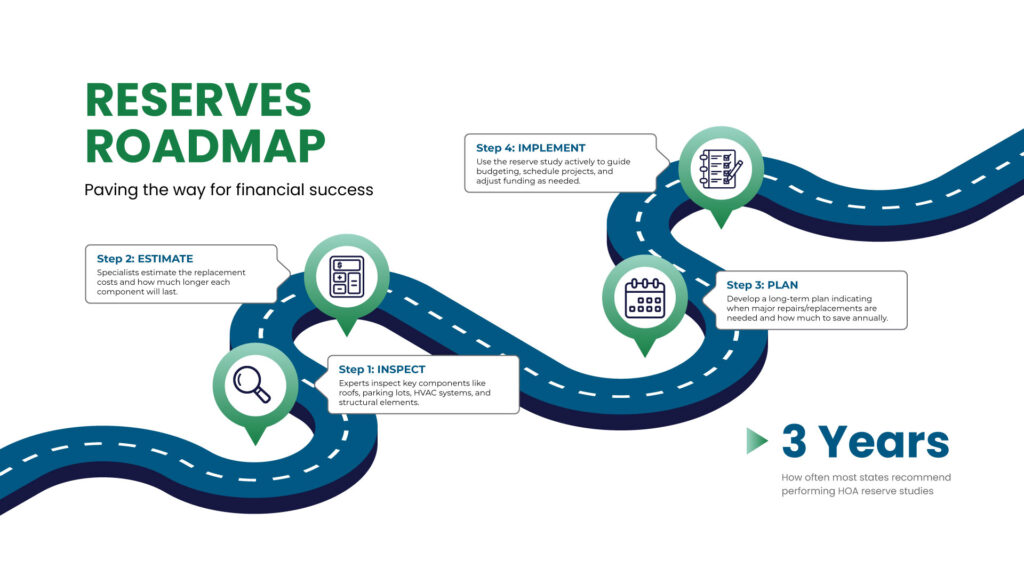
A reserve study is a professional assessment of your community's major components and their remaining useful life. Reserve specialists inspect buildings, parking areas, roofs, and other significant assets, then estimate replacement costs and timelines. The resulting report provides a detailed roadmap for reserve funding over the next 30 years.
Most states recommend reserve studies every three years. The study identifies which components need attention soon and which have many years remaining. This information allows boards to plan projects strategically and fund reserves appropriately. Communities without recent reserve studies often discover they're significantly underfunded, leading to difficult choices about special assessments or deferred maintenance.
Kunkle emphasizes the importance of actively using reserve study findings: "I always tell boards that a reserve study isn't meant to sit on a shelf. It should be a living roadmap that helps guide budget conversations, project planning, and long-term decisions. The real value comes when the board actually uses it."
Reserve Funding Methods
Percentage Funding Approach
The percentage funding method calculates reserves as a percentage of the annual operating budget. For example, if your operating budget is $500,000 and you fund reserves at 20 percent, you contribute $100,000 annually to reserves. This straightforward approach is easy to understand and communicate to homeowners.
Component Method
The component method calculates the cost to replace each major component, divides by its remaining useful life, and funds accordingly. This method is more precise but requires detailed reserve study information. For example, if a roof costs $200,000 and has 20 years remaining, you'd contribute $10,000 annually for roof replacement.
Cash Flow Method
The cash flow method projects when major projects will occur and calculates required annual contributions to have sufficient funds available. This method aligns reserve contributions with actual project timelines and is particularly useful for communities with significant projects planned in the near term.
Best Practices for Reserve Management
Establish a separate reserve account distinct from operating funds. This prevents accidental spending of reserve money for routine expenses and demonstrates fiscal responsibility to homeowners. Many communities maintain reserve accounts at different financial institutions to reduce temptation and ensure funds remain dedicated to their intended purpose.
Invest reserve funds conservatively in low-risk vehicles such as money market accounts, certificates of deposit, or short-term bonds. While returns may be modest, safety is paramount. Reserve funds must be available when needed for major projects, so aggressive investment strategies are inappropriate.

When it comes to the long-term implications of reserve decisions, Kunkle stresses the importance of forward-thinking stewardship: "The decisions a board makes today don't just affect the people living in the community right now. They affect the homeowners who will be there five, ten, or twenty years from now. To me, good reserve planning is one of the clearest examples of responsible stewardship."
Communicate reserve funding clearly to homeowners. Many homeowners misunderstand reserves and resent reserve contributions, viewing them as excessive fees. Board members should explain why reserves are necessary, how much is needed, and when major projects are planned. Transparency builds trust and reduces conflict.
Kunkle advocates for transparency as a key tool in building community support: "Homeowners are much more likely to understand an increase in reserve contributions when they understand what they're paying for. Showing them the roof, pavement, siding, or other future project behind those dollars changes the conversation. Transparency goes a long way toward building trust."
Review reserve funding annually and adjust contributions as needed. Market conditions, construction cost inflation, and changing project timelines may require modifications to your reserve funding plan. Professional reserve studies help identify when adjustments are necessary.
The Peace of Mind Advantage
Proper reserve management provides genuine peace of mind for board members and homeowners. Boards that maintain adequate reserves avoid the stress of emergency special assessments and can make thoughtful decisions about major projects. Homeowners appreciate knowing their community is financially stable and well-maintained.
HOALiving helps boards establish reserve funding plans aligned with reserve studies and community needs. Our professional accounting services ensure reserves are properly funded, invested, and documented. Our comprehensive community management services handle reserve funding communication clearly to homeowners and help boards make strategic decisions about major projects. With professional guidance, your community achieves the financial stability and peace of mind that comes from knowing reserves are managed expertly.
The Wrap Up
HOA reserve funds are essential for long-term community financial health. Proper reserve funding prevents special assessments, enables strategic planning, and demonstrates responsible stewardship to homeowners. By conducting regular reserve studies, selecting appropriate funding methods, and maintaining transparent communication, boards can build reserves that protect their communities.
Professional HOA management companies like HOALiving specialize in reserve fund management and help boards navigate complex funding decisions. Whether establishing reserves for the first time or optimizing existing reserve programs, HOALiving's expertise ensures your community achieves financial stability and the peace of mind that comes from knowing your reserves are managed by professionals.
Ready to understand your reserve funds? Contact HOALiving today to learn how we help boards make confident decisions towards financial stability.
Frequently Asked Questions