Quick Answer:
A year-end financial audit is a comprehensive examination of your HOA's financial records to ensure accuracy, compliance, and proper fund management. Proper preparation involves organizing documentation, reconciling accounts, and reviewing vendor invoices. Professional HOA accounting firms like HOALiving help boards prepare audit-ready records, reducing stress and ensuring compliance with state regulations and fiduciary duties.
"The most successful audits aren't created during audit season. They're the result of consistent financial stewardship throughout the year,” said Scott Anderson, HOALiving’s Mountain West Division President.
If your association requires a year-end financial audit, it doesn’t have to be stressful. With proper preparation and professional guidance, the HOA board can approach the audit process with confidence and peace of mind. Whether you're managing finances independently or working with a professional accounting firm, understanding the audit preparation process is essential for every board member.
This guide walks you through the complete HOA financial audit checklist, explaining what auditors examine and how to prepare your community's records for a smooth, successful audit.

Scott Anderson
Understanding HOA Financial Audits
An HOA financial audit is a detailed examination of your community's financial records, transactions, and controls. Auditors verify that funds are properly managed, expenses are legitimate, and financial statements accurately reflect your community's financial position. Many states, some governing documents, and even a few lenders require HOAs to conduct annual audits or reviews.
The audit process typically takes 4-8 weeks and involves auditors reviewing bank statements, invoices, contracts, board meeting minutes, and reserve fund documentation. The goal is to provide homeowners and lenders with assurance that your HOA's finances are managed responsibly and in compliance with applicable laws.
The Complete HOA Financial Audit Preparation Checklist
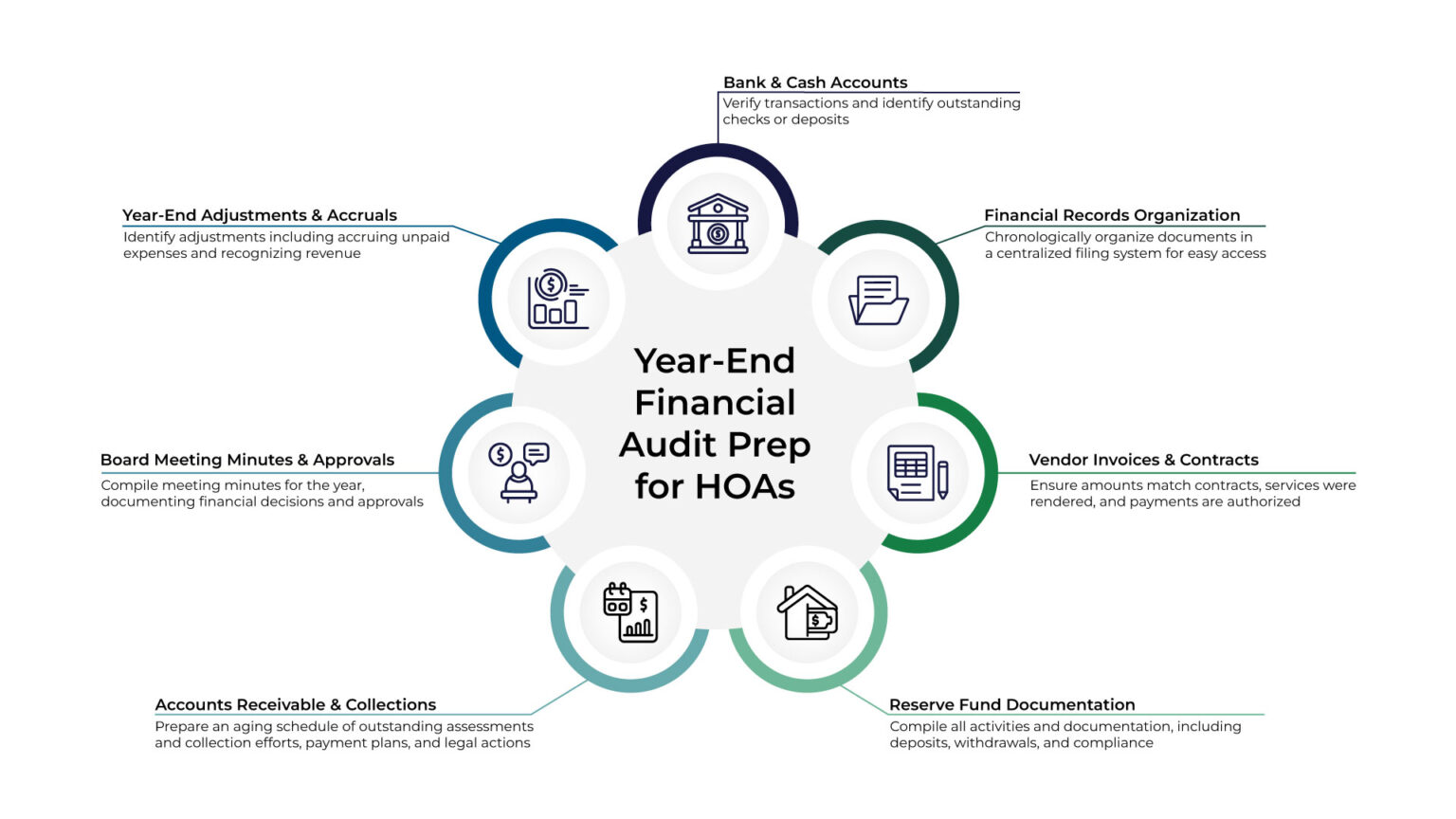
Bank and Cash Accounts
Begin by reconciling all bank accounts. Gather statements for the entire fiscal year and verify that recorded transactions match bank records. Identify any outstanding checks or deposits in transit. Ensure all accounts are properly documented and authorized. This foundational step prevents discrepancies that could delay your audit.
Financial Records Organization
Organize all financial documentation chronologically. This includes general ledgers, journal entries, account reconciliations, and transaction documentation. Create a centralized filing system (physical or digital) that auditors can easily navigate. Clear organization demonstrates financial competence and accelerates the audit process.
Vendor Invoices and Contracts
Review all vendor invoices for the fiscal year. Verify that amounts match approved contracts and that services were actually rendered. Ensure invoices are properly authorized and paid from appropriate accounts. Document any contract amendments or changes. This step protects your community from overpayments and fraud.
Reserve Fund Documentation
Compile all reserve fund activity, including deposits, withdrawals, and investment statements. If you conducted a reserve study during the year, include the final report. Document how reserve funds were allocated and ensure compliance with your reserve funding plan. Auditors scrutinize reserve funds carefully, so thorough documentation is critical.
Accounts Receivable and Collections
Prepare a detailed aging schedule of all outstanding assessments. Document collection efforts, payment plans, and any legal proceedings. Include records of delinquent accounts, liens filed, and amounts collected. This demonstrates that your board actively manages delinquencies and protects community finances.
Board Meeting Minutes and Approvals
Compile board meeting minutes from the entire fiscal year. Ensure minutes document financial decisions, budget approvals, and authorization of expenditures. Auditors verify that significant financial transactions received proper board approval. Well-documented minutes provide evidence of governance and oversight.
Year-End Adjustments and Accruals
Work with your accounting team to identify necessary year-end adjustments. This includes accruing unpaid expenses, recognizing revenue, and adjusting for prepaid items. Proper accrual accounting ensures your financial statements accurately reflect your community's financial position at year-end.
Why Professional Accounting Services Matter
Many HOA boards attempt to manage audits independently, which often leads to stress, delays, and incomplete documentation. Professional HOA accounting firms like HOALiving specialize in audit preparation and ensure your records meet auditor requirements. Our expertise prevents costly mistakes and accelerates the audit timeline.
More importantly, professional accounting services provide peace of mind. Board members can focus on community leadership while accounting professionals handle complex financial management and audit coordination. HOALiving's AAMC-accredited team ensures your HOA maintains audit-ready records year-round, eliminating last-minute scrambling and uncertainty.
Professional firms also identify and correct financial issues before auditors discover them, protecting your community's reputation and financial integrity. They communicate directly with auditors, answer technical questions, and ensure your HOA's financial practices comply with state regulations and industry standards.


Final Words for Year-end
Year-end financial audits are essential for HOA governance and homeowner protection. By following this comprehensive checklist and organizing documentation throughout the year, your board can approach audits confidently. However, the most effective approach is partnering with full-service HOA managers.
HOALiving helps boards prepare for audits, manage finances year-round, and achieve the peace of mind that comes from knowing your community's finances are in expert hands. Whether you're preparing for your first audit or your twenty-first, contact us for professional guidance that ensures success.
Frequently Asked Questions